Introduction
Choosing a drinkware manufacturer is not simply about comparing prices.
Two suppliers may offer similar-looking bottles and similar quotations. The difference often becomes clear later — when you need a product customized, a sample needs to be adjusted, a quality issue appears, or you place the same order again months later.
For brand owners, importers, distributors, and gift companies, a reliable manufacturer should understand the product, maintain consistent quality, communicate clearly, and make a genuine effort to deliver what has been agreed.
A practical drinkware supplier evaluation does not need to be complicated. Here are some things worth checking before you start a drinkware project.
What Should You Check Before Choosing a Drinkware Manufacturer?
Before moving into mass production, ask practical questions rather than relying only on a supplier's general claims.
Evaluation Area | Practical Question to Ask Your Supplier |
|---|---|
Product | Does the supplier understand your specifications and product structure? |
OEM / ODM | Can they support the level of customization your project requires? |
Quality | What is actually checked during production? |
Consistency | Can the approved sample and specifications be maintained in repeat production? |
Customization | Can they handle lids, colors, finishes, printing and packaging as required? |
Communication | Will they explain problems or changes early? |
Commitment | Do they make a genuine effort to deliver what has been agreed? |
This simple checklist can help make conversations with potential suppliers more productive and give you a clearer basis for comparison.
1. Start With Product Understanding, Not Just Price
A drinkware project can involve much more than a bottle body.
Depending on the product, you may need to discuss:
Material and capacity
Bottle dimensions
Lid structure and drinking method
Silicone or other components
Surface finish and color
Printing
Packaging
Tooling or product development
Pay attention to the questions the manufacturer asks.
Do they understand the important details? Do they identify points that may affect production? Do they explain what can and cannot be done?
A useful supplier should be able to discuss the product with you, not simply send a quotation.
2. Check the Manufacturer's OEM and ODM Capability
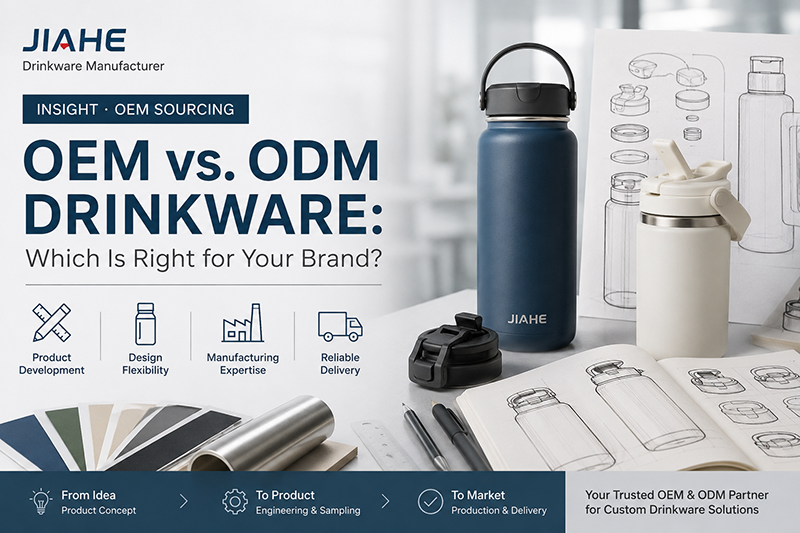
With OEM, the buyer normally provides a design, drawing, specification, or sample for production.
With ODM, the manufacturer becomes more involved in product development and customization.
Many drinkware projects combine elements of both.
For example, a buyer may start with an existing bottle but request a different lid, color, finish, packaging solution, or other modifications.
The important question is not simply whether a supplier says “OEM/ODM available.”
Ask what they can actually customize and how the development process works.
For a deeper explanation, see our guide to OEM vs. ODM Drinkware: Which Is Right for Your Brand?
3. Look at the Complete Drinkware Product
An insulated bottle is more than its stainless steel body.
Its performance can involve:
Inner and outer wall construction
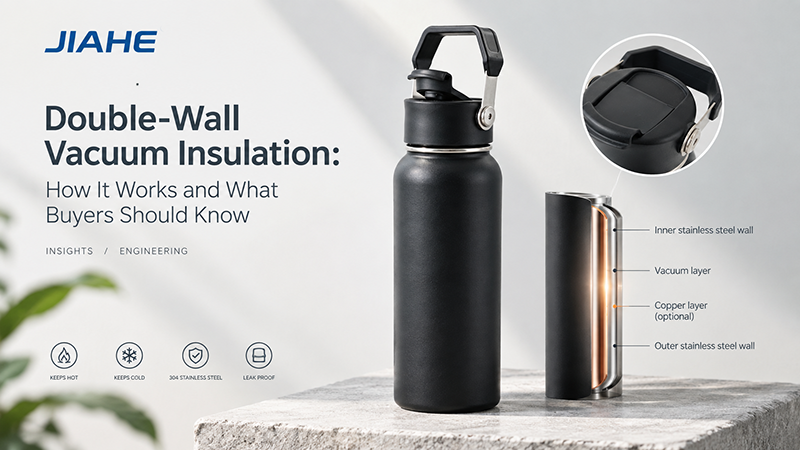
Vacuum insulation
Lid structure
Sealing components
Surface treatment
Assembly
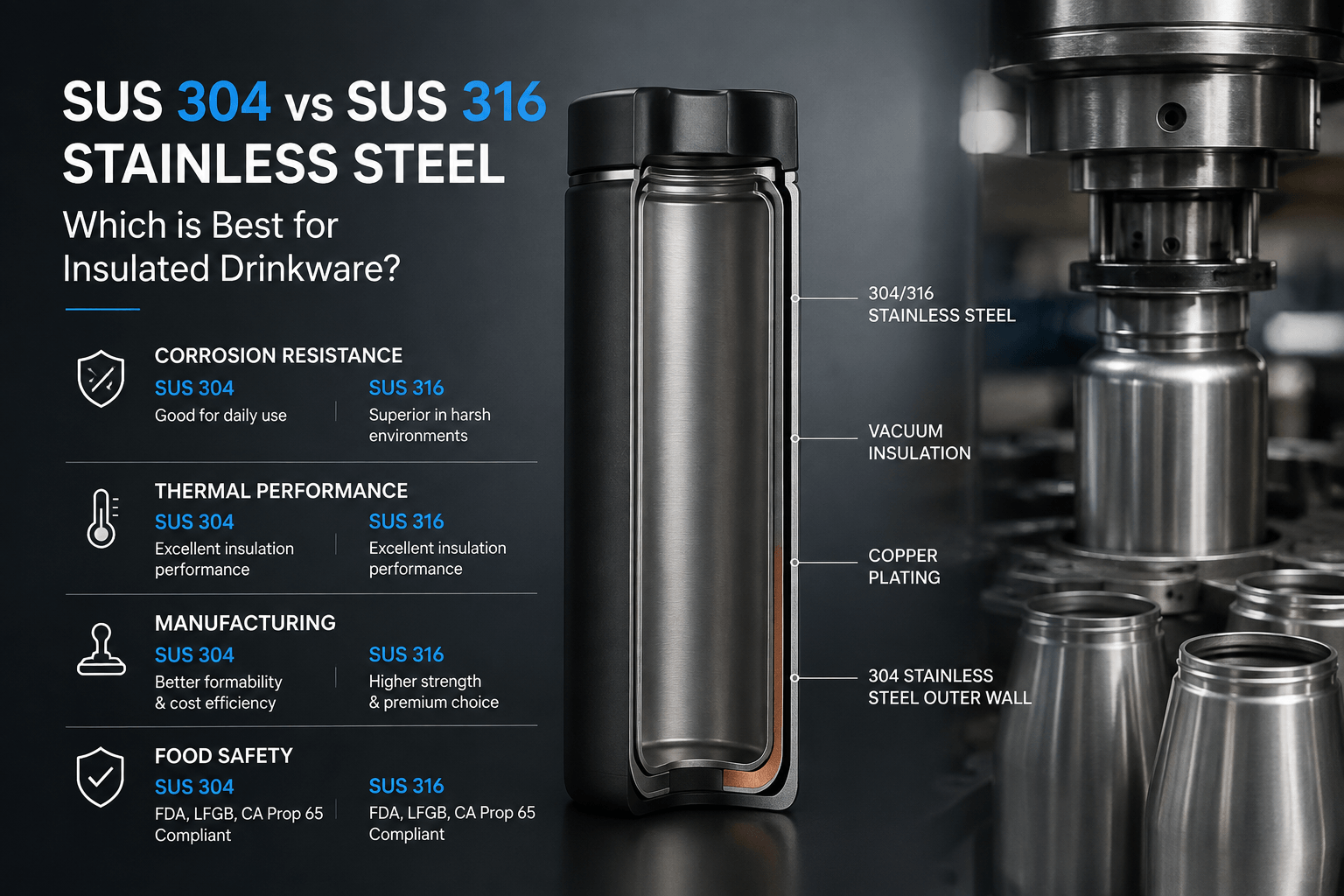
For example, thermal performance depends on the overall construction, not simply whether the bottle uses SUS 304 or SUS 316.
Leak performance also depends on the lid, gasket, fit, and assembly.
This is why it is useful to work with a manufacturer that understands how the different parts of the product work together.
For more information, see Double-Wall Vacuum Insulation: How It Works and What Buyers Should Know.
4. Ask How Quality Is Actually Checked
“Strict QC” is easy to say.
A more useful question is:
What do you actually check during production?
Depending on the product and production stage, checks may include:
Dimensional inspection
Visual inspection
Surface and printing inspection
Leak testing
Insulation performance checks
Assembly checks
Packaging inspection
The exact inspection method and frequency will depend on the product and production requirements.
If possible, ask to understand how these checks are performed, rather than relying only on a general QC statement.
For example, you may want to understand how dimensions are checked, how leakage is tested, or how the approved sample is used as a reference during production.
The goal is not to create unnecessary paperwork. It is to understand how the manufacturer actually manages quality.
5. Ask How They Maintain Consistency
A good first sample is important.
For a brand, however, repeat production may be even more important.
The question is:
Will the next production run continue to match the approved product?
Consistency can involve:
Material
Dimensions
Color
Surface finish
Printing
Lid fit
Functional performance
Packaging
An approved sample and clearly confirmed specifications give both sides a common reference.
This becomes especially important when a product will be reordered over time.
A supplier evaluation should therefore look beyond the first sample and consider whether the manufacturer can maintain the agreed product consistently across repeat orders.
6. Look for Accurate Product Information
Trust starts with knowing exactly what you are buying.
A manufacturer should be clear about the materials, specifications, construction, customization options, and production requirements of the product being offered.
If a product is specified as SUS 304 stainless steel, for example, both sides should have a clear understanding of that requirement before production begins.
The same applies to the lid, finish, color, packaging, and other agreed specifications.
Clear product information also makes it easier to compare suppliers on a like-for-like basis and make a realistic purchasing decision.
Honest communication starts with accurate product information.
7. The Real Test: What Happens When Something Goes Wrong?
No manufacturing project can guarantee that unexpected situations will never occur.
A production schedule may change. A component may require further discussion. A quality issue may be discovered during inspection.
The important question is how the manufacturer responds.
A responsible manufacturer should make every reasonable effort to solve the problem and fulfill what has been agreed.
If something genuinely cannot be completed as originally planned, the customer should know as early as possible.
Early communication gives the buyer time to consider the available options and make the right business decision.
A reliable manufacturer is not one that promises there will never be problems. It is one that makes a genuine effort to keep its commitments and communicates openly when circumstances change.
For a long-term B2B relationship, that can be more valuable than a perfect sales presentation.
8. What Should You Confirm Before Mass Production?
Before moving from an approved pre-production sample to mass production, confirm the key details in writing.
At a minimum, review:
Product specifications
Materials and capacity
Lid and component requirements
Color and surface finish
Printing
Packaging
Approved sample
Quality requirements
MOQ
Production schedule
Tooling or development requirements
The purpose is simple:
Both sides should be working from the same information.
Clear specifications at the beginning make later production and communication much easier.
What Does This Mean at JIAHE?
At JIAHE, we work with both existing drinkware models and customized OEM/ODM projects.
Depending on the project, this can involve stainless steel drinkware, vacuum processing, lid development and manufacturing, plastic and silicone components, surface treatment, printing, assembly, inspection, and packaging.
But manufacturing capability is only part of a long-term supplier relationship.
We believe that accurate product information, consistent quality, and honest communication are equally important.
When a requirement can be fulfilled, we make every reasonable effort to fulfill it.
When an unexpected situation genuinely requires a change, we believe the customer should know early enough to make the right decision.
That is how we believe a long-term manufacturing relationship should work.
The Bottom Line
Choosing a reliable drinkware manufacturer is about more than finding a competitive quotation.
Look at how the supplier understands the product, handles quality, maintains consistency, supports customization, and communicates when circumstances change.
A good supplier does not need to promise that nothing will ever go wrong.
What matters is whether they are honest about what they can deliver, make a genuine effort to keep their commitments, and give you enough information to make the right decision when something changes.
FAQ
What should I look for in a reliable drinkware manufacturer?
Look for product knowledge, OEM/ODM capability, consistent quality, accurate product information, customization capability, and clear communication.
What questions should I ask a drinkware supplier before placing an order?
Ask about materials, specifications, customization, samples, quality checks, MOQ, production schedule, packaging, and how changes or unexpected issues will be handled.
Should I request a sample before mass production?
Yes. An approved sample gives both the buyer and manufacturer a clear reference for mass production.
How can I evaluate drinkware quality?
Review the approved sample and ask what quality checks are performed during production, including relevant dimensional, visual, leak, insulation, assembly, and packaging checks.
What should a manufacturer do if it cannot meet an agreed requirement?
It should communicate with the buyer as early as possible, explain the situation, and discuss practical solutions.