The Science of Vacuum Insulation
Double-wall vacuum insulation is the gold standard technology for temperature-retaining drinkware. Understanding its principles helps manufacturers optimize product performance and communicate value to customers.
How It Works
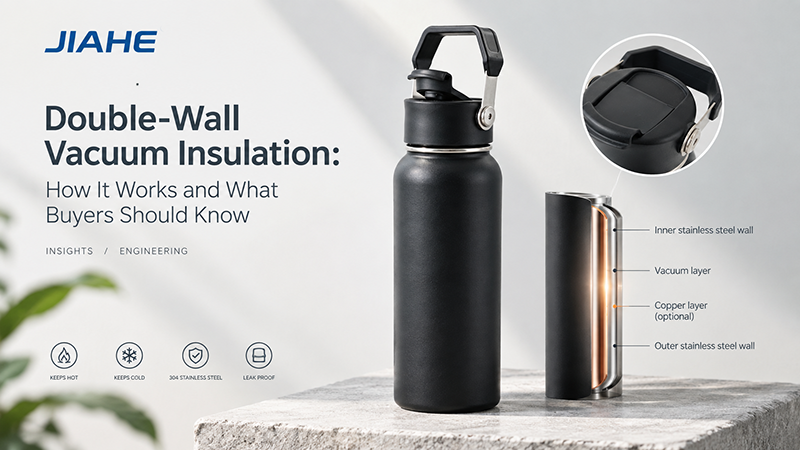
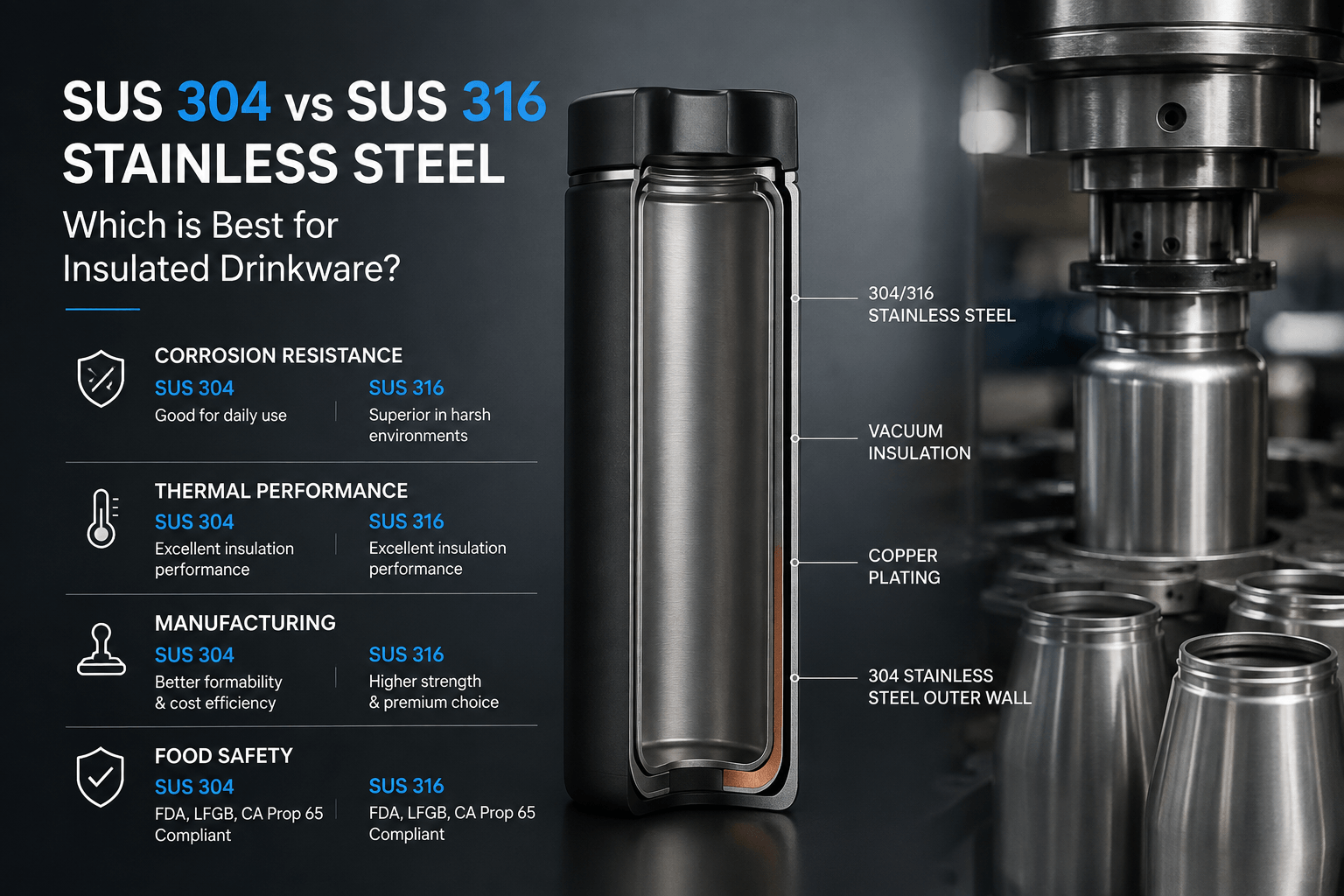
The technology creates a vacuum-sealed gap between two stainless steel walls. By evacuating air from this space, heat transfer through conduction and convection is virtually eliminated. Only radiation remains as a heat transfer pathway, which is further reduced by copper plating on the inner wall surface.
Thermal Performance Benchmarks
A well-manufactured double-wall vacuum insulated bottle typically maintains cold beverages for 24 hours and hot beverages for 12 hours. Key factors affecting performance include vacuum level (target below 10⁻³ Pa), wall gap width (1.5-2mm optimal), and seal integrity.
Manufacturing Considerations
Vacuum insulation requires precise welding of the inner and outer shells, controlled evacuation processes, and rigorous leak testing. Copper plating on the inner wall enhances thermal reflection. The bottom seal must withstand repeated thermal cycling without degradation over the product lifetime.
Quality Testing
Standard tests include thermal retention measurement per ASTM standards, helium leak detection for vacuum integrity, and accelerated aging tests simulating years of daily use. These ensure consistent performance across production batches.
For products intended for food and beverage contact, manufacturers should also ensure compliance with FDA food-contact regulations (21 CFR 175–178). This covers material safety, migration limits, and labeling requirements for stainless steel drinkware sold in the United States market.